APESS is not only lectures and labs—it’s also about building a community. Our Social and Technical Excursions combine a guided introduction to Turin with three technical visits that connect directly to the course storyline: design → print → instrument → forecast → adapt.
City Visit (Sun, 12 July 2026) — Turin in one day
We will explore Turin as a living lab of engineering, design, and cultural heritage: historic architecture and public spaces, the city’s industrial legacy, and its contemporary innovation scene. The visit is designed as a relaxed ice-breaker for participants to meet, form teams, and start discussing the prototype challenge in an inspiring real-world setting.
Technical Visit — 13 July 2026 — Technical Visit to DISEG SISCON MASTRLAB
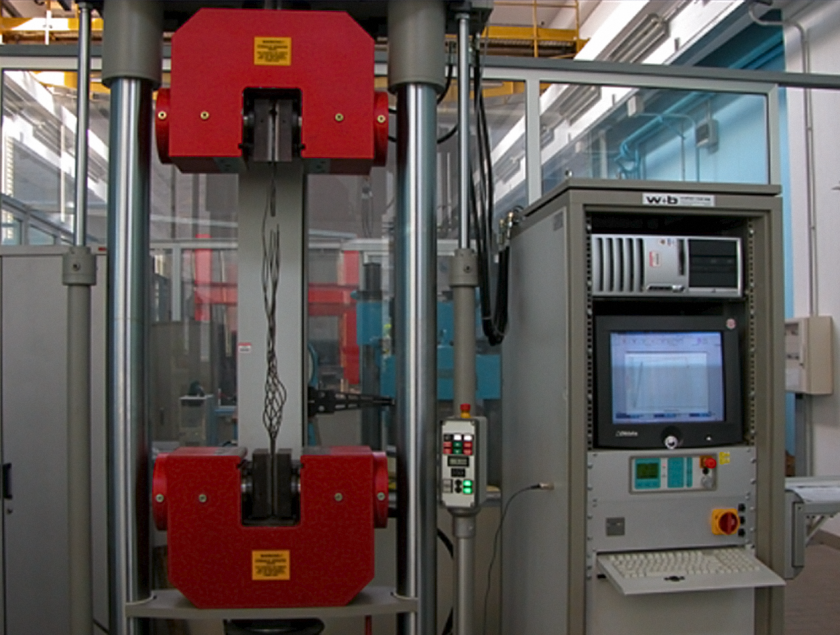
The MASTRLAB laboratory operates in the field of experimental scientific research on structures made of traditional and innovative building materials. The Laboratory is official under the Law 1086 of 5/11/1971 “Norme per la disciplina delle opere di conglomerato cementizio armato, normale e precompresso ed a struttura metallica”.
The activity carried out concerns fields of application such as the behavior of reinforced concrete and c.a.p, structures, experiments on beam-pillar structural nodes, the study of the constitutive laws of traditional and innovative building materials, the assessment of structural safety, durability and seismic vulnerability.
MASTRLAB also deals with non-destructive tests (core drilling, ultrasound, extraction, impact, etc.), and with the design and development of innovative structural monitoring systems, as well as the design and development of innovative methodologies for carrying out mechanical tests on materials and structural elements.
The Laboratory is the seat of the Force Section of the ACCREDIA LAT Calibration Laboratory n. 139 of the Politecnico di Torino for the calibration of material testing machines, and is also accredited according to UNI CEI EN ISO / IEC 17025
MASTRLAB Director: Prof. F. Tondolo, DISEG, Politecnico di Torino
Technical Visit — 18 July 2026 — IREN hydroelectric power Ceresole-Rosone plant

The technical visit will take place at the IREN Rosone hydroelectric power plant, located in the Orco Valley system in Piedmont, Italy. The plant uses water stored in the Ceresole reservoir, situated at 1,572 metres above sea level, with a storage capacity of 34 million m³, as well as water from the Telessio and Eugio basins and the Piantonetto stream.
The Ceresole-Rosone plant, installed in 1960, is equipped with two generation units of 49.3 MW each, powered by horizontal-axis Pelton turbines. With an 813 m hydraulic head and a maximum flow rate of 14 m³/s, the plant has an annual production capacity of approximately 250 GWh.
The visit will offer participants the opportunity to explore a major alpine hydroelectric facility and better understand the role of reservoir-based and run-of-river hydropower in renewable electricity generation.
Sources: Wikipedia — Centrale idroelettrica di Rosone; Gruppo IREN — Impianti idroelettrici
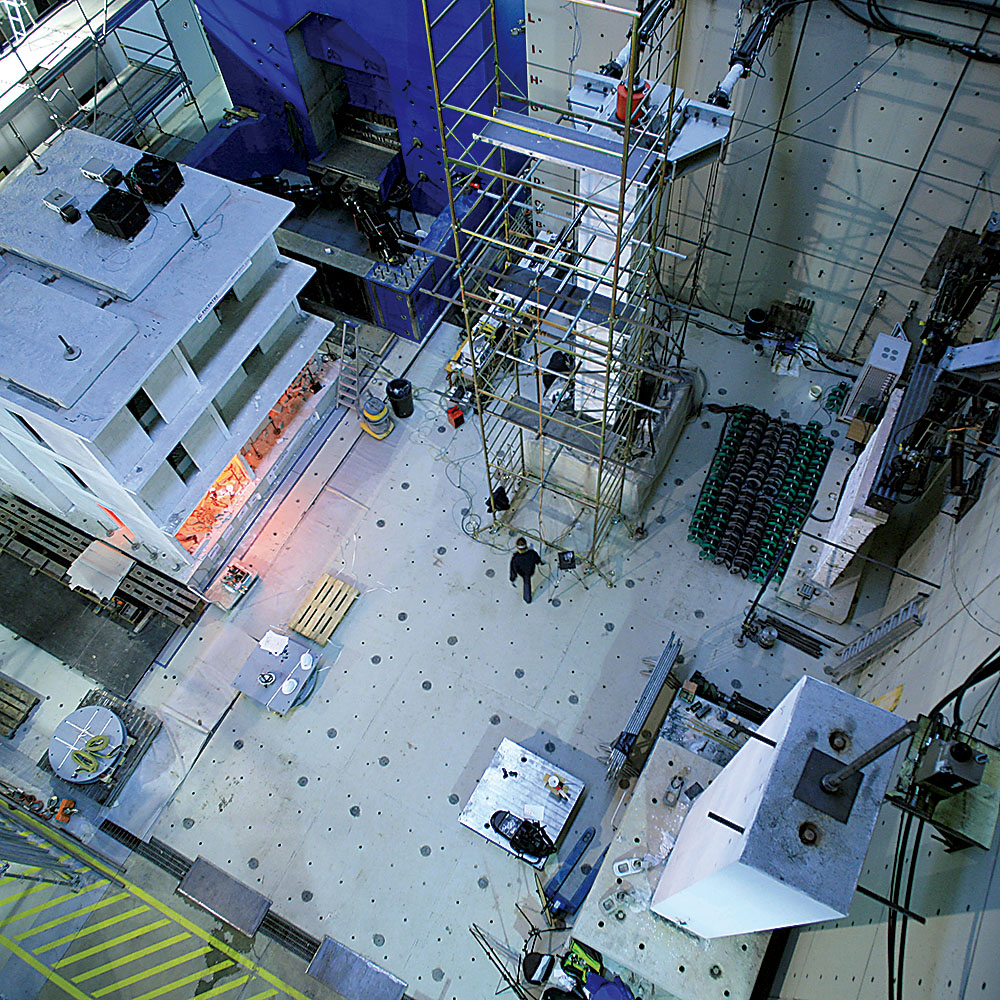
Technical Visit — 26 July 2026 — Technical Visit to EUCENTRE
Eucentre is a private non-profit foundation that pursues a mission of research, training, and service provision in the field of earthquake engineering and, more generally, of risk engineering.
Founded in 2005 as an evolution of the European Centre for Training and Research in Earthquake Engineering already active in Pavia since 2003, it was established by four Founders, the University of Pavia, the University School for Advanced Studies IUSS of Pavia, the Italian Department of Civil Protection, the National Institute of Geophysics and Volcanology, to further develop the scientific, research and training expertise in the sector present in Pavia.
Today Eucentre has an important asset of experimental labs consisting of shaking tables able to reproduce any seismic event for testing both structural and non-structural elements and for the qualification of anti-seismic devices.
Eucentre also manages a data lab that, thanks to an extensive database of Italian buildings and infrastructures, allows to produce risk analyses and scenarios related to both measured and hypothetical seismic events.
Eucentre operates within an international network with other research centres, earthquake engineering laboratories, institutions and companies.
Eucentre is Centre of Competence of the Italian Department of Civil Protection, to which it provides emergency support, elaboration of risk scenarios and research activities for the improvement of Civil Protection activities.
Together with the two Pavia universities, Eucentre also offers training courses for undergraduate and postgraduate students and for practitioners in the field of earthquake engineering and risk management.
Today Eucentre is an international reference centre for institutions, for which it operates in the definition of emergency plans, in the elaboration of risk scenarios, in the vulnerability assessment of buildings and infrastructures, and for companies, to which it offers experimental and supporting services for the seismic design in various sectors such as civil engineering, transport networks, energy production and transport, hydrocarbon extraction, production of industrial devices, certification of anti-seismic devices.
Sources: https://www.eucentre.it/en/